How Much Does a Computer Monitor Cost in Kenya? Leave a comment
There’s nothing quite like squinting at a tiny laptop screen for eight hours a day, wondering why your neck hurts and your productivity has tanked. A decent monitor changes everything. But walking into a shop in Nairobi and seeing prices from KSh 8,000 to over KSh 80,000 can leave you more confused than when you started.
Here’s the breakdown of what monitors actually cost in Kenya right now, what you’re paying for, and how to avoid getting ripped off.
Quick Price Snapshot
| Monitor Type | Price Range (KSh) | Best For |
|---|---|---|
| 22-inch Basic FHD | 4,500 – 12,000 | Tight budgets, students, basic office work |
| 24-inch FHD (IPS) | 6,500 – 30,000 | The sweet spot—most office workers, everyday use |
| 27-inch FHD (IPS) | 27,000 – 41,000 | Multi-taskers, professionals wanting more screen space |
| 27-inch 4K UHD | 46,000 – 65,000 | Designers, video editors, anyone who needs serious detail |
| 34-inch Ultrawide | 65,000 – 84,000 | Multitasking power users, data analysts, immersive gaming |
What Are You Actually Paying For?
Panel Technology: IPS vs. VA vs. TN
This is the biggest quality factor you’ll encounter. IPS (In-Plane Switching) panels are the gold standard for most people—they offer better color accuracy and wide viewing angles . Most monitors you’ll find in Nairobi use IPS, from budget options to premium ones.
Refresh Rate: The Smoothness Factor.
Standard office monitors used to run at 60Hz, but 100Hz is quickly becoming the new normal . What does that mean for you? Smoother scrolling, less eye strain, and a noticeably more responsive feel when you’re navigating spreadsheets or just moving windows around. The Lenovo ThinkVision S24-4e and HP Series 5 both offer 100Hz at competitive prices .
Resolution: FHD vs. 4K.
Full HD (1920×1080) is perfectly fine for most office work and general use. But if you’re doing graphic design, video editing, or just want text to look like it’s printed on paper, 4K is a game-changer . The Xiaomi 4K Monitor A27Ui at KSh 40,000 is one of the most affordable ways to get into 4K, and it comes with 90W USB-C charging—one cable for video, data, and power.
Built-in Features
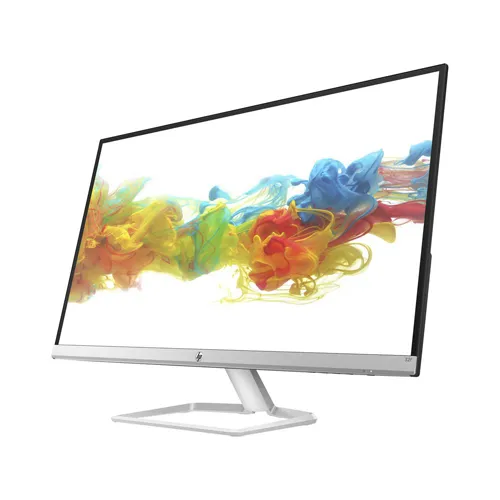
Speakers, USB hubs, and ergonomic stands all add to the price. The Dell S2725H packs dual 5W speakers—noticeably better than the standard 2W ones you usually find—at KSh 25,000 . The HP E27 G5 comes with a full USB hub and a stand that adjusts in four directions, making it a solid choice for professionals .
What You Should Buy, Based on Your Needs
Budget Buyer (KSh 5,000 – 15,000)
You can get a decent 22-inch or refurbished 24-inch monitor. Jumia has a wide selection of refurbished monitors that have been tested and restored . Just check the warranty and make sure you’re buying from a seller with good reviews.
Office Worker (KSh 15,000 – 30,000)
This is where you get the best value. The Lenovo ThinkVision S24-4e is a solid 24-inch choice at KSh 20,000 .
For a bigger screen, the Dell S2725H at KSh 25,000 gives you a 27-inch display with 100Hz refresh rate and decent built-in speakers .
If you want a premium option with a fully adjustable stand and USB hub, the Dell S2421HS is about KSh 17,000 .
Creative Professional (KSh 45,000+)
If you’re serious about colour work, look at the Xiaomi 4K Monitor A27Ui at KSh 40,000 .
It’s factory-calibrated with colour accuracy that rivals monitors twice the price, and the 90W USB-C charging is a lifesaver for laptop users.
New vs. Refurbished: Which Should You Go For?
Refurbished monitors can save you a lot of money. Jumia offers a wide range of certified refurbished options that have been tested and restored to working condition . The trade-off is that warranties are often shorter—usually 3 to 6 months instead of a full year and the condition depends entirely on the seller’s testing standards. For peace of mind, buying new is safer. But if you’re on a tight budget, a refurbished 24-inch monitor from a trusted seller can be a smart buy.
Final Thoughts.
The key to buying a monitor in Kenya is knowing what you actually need. A cheap, smaller monitor might seem like a saving, but if you’re spending eight hours a day looking at it, the investment in a larger, better-quality screen is always worth it.
Stick to reputable shops, check the specs carefully, and don’t rush. The right monitor is out there, and it’s waiting for you.
What monitor are you using right now? Drop a comment and let others know what’s worked for you.